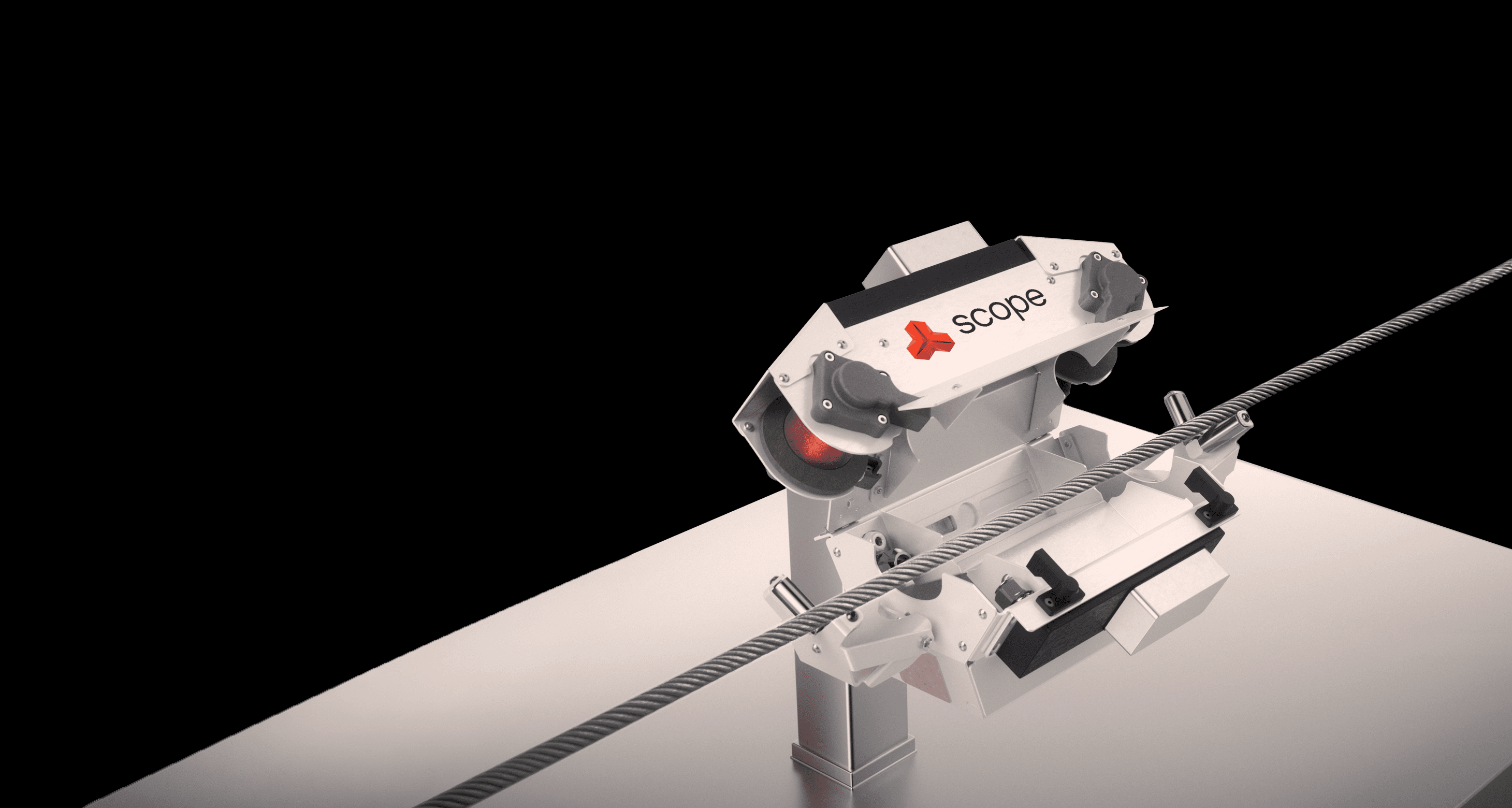
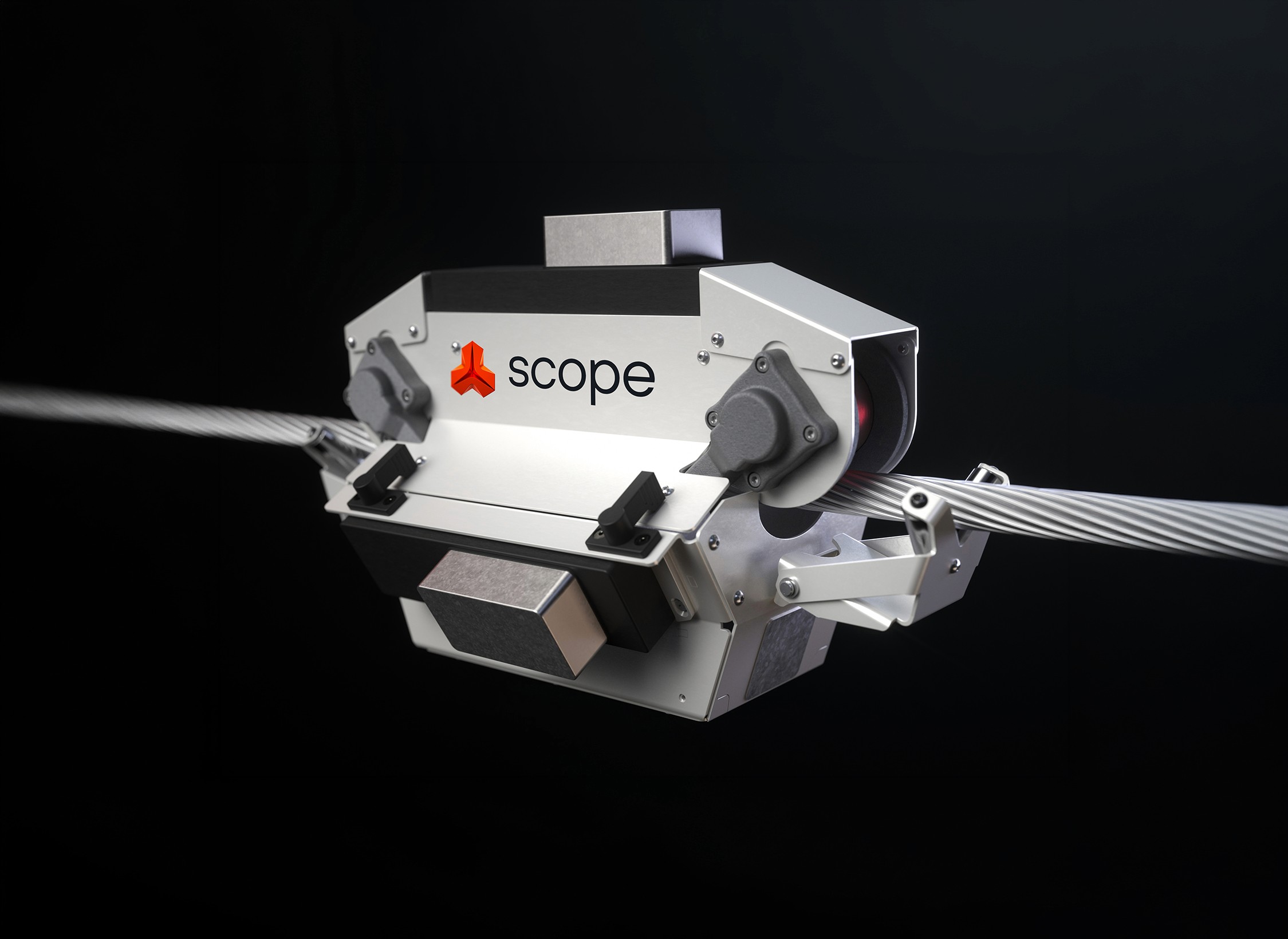
Vision² is the first crane rope inspection system that captures every inch, every angle, every defect — automatically, at 8 mph, with sub-millimeter precision.

The Problem
with how it's done today
Crane rope inspection hasn't fundamentally changed in decades. A trained eye. A caliper. A clipboard. That's the industry standard — and it's failing the industry.
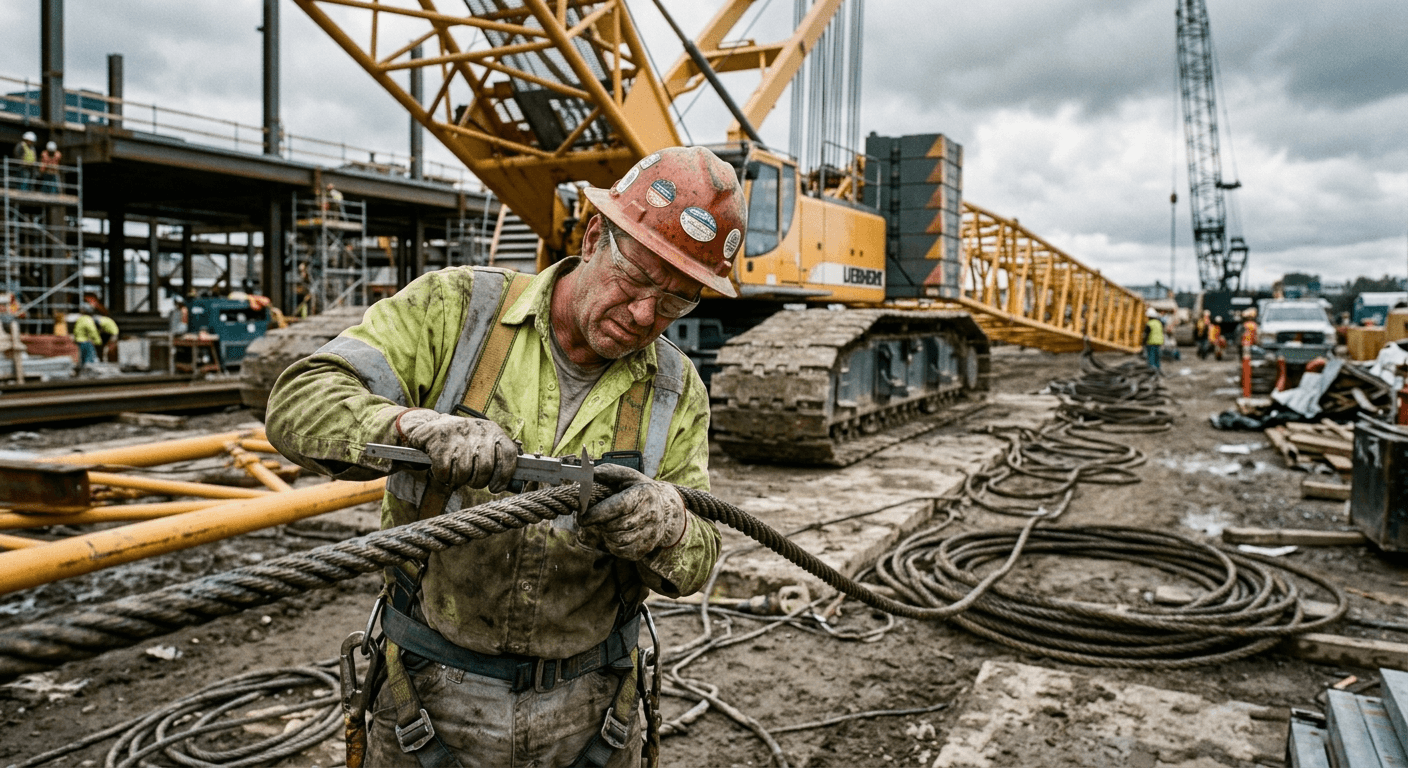
Visual inspection alone is slow and incomplete.
An inspector can only ever see one side of the rope at a time.
They measure diameter at a handful of points along hundreds of feet of line.
They count broken wires by eye, in dim light, on a working line.
They’re asked to document everything — and end up snapping smartphone photos of caliper readings to call it a record.
What isn't measured isn't known.
And because inspections are this hard to do well, they don't get done as often as they should.
The cost shows up everywhere — in citations, in downtime, in failures that didn't have to happen.
#1
Wire rope deficiencies are the most-cited crane violation by OSHA inspectors
~20%
Share of crane accidents linked to steel wire rope defects
42–44
Crane-related fatalities in the U.S. each year
$200k-$250k
Daily cost of a crane equipment-failure shutdown
$356,250
OSHA penalty per willful or repeated violation
5%
Diameter reduction that triggers immediate removal from service (OSHA 1926.1413)
6 or 3
Broken-wire limit per rope lay: 6 distributed, or 3 in a single strand
3
OSHA-required inspection cadences for running wire rope: shift, monthly, annual
What Vision² Does Differently
Turn the slowest, most error-prone step into the fastest and most defensible one
Any operator can now perform the most thorough rope inspection in the industry — at the speed of a working pull.
diameter measurement
Continuous, sub-millimeter
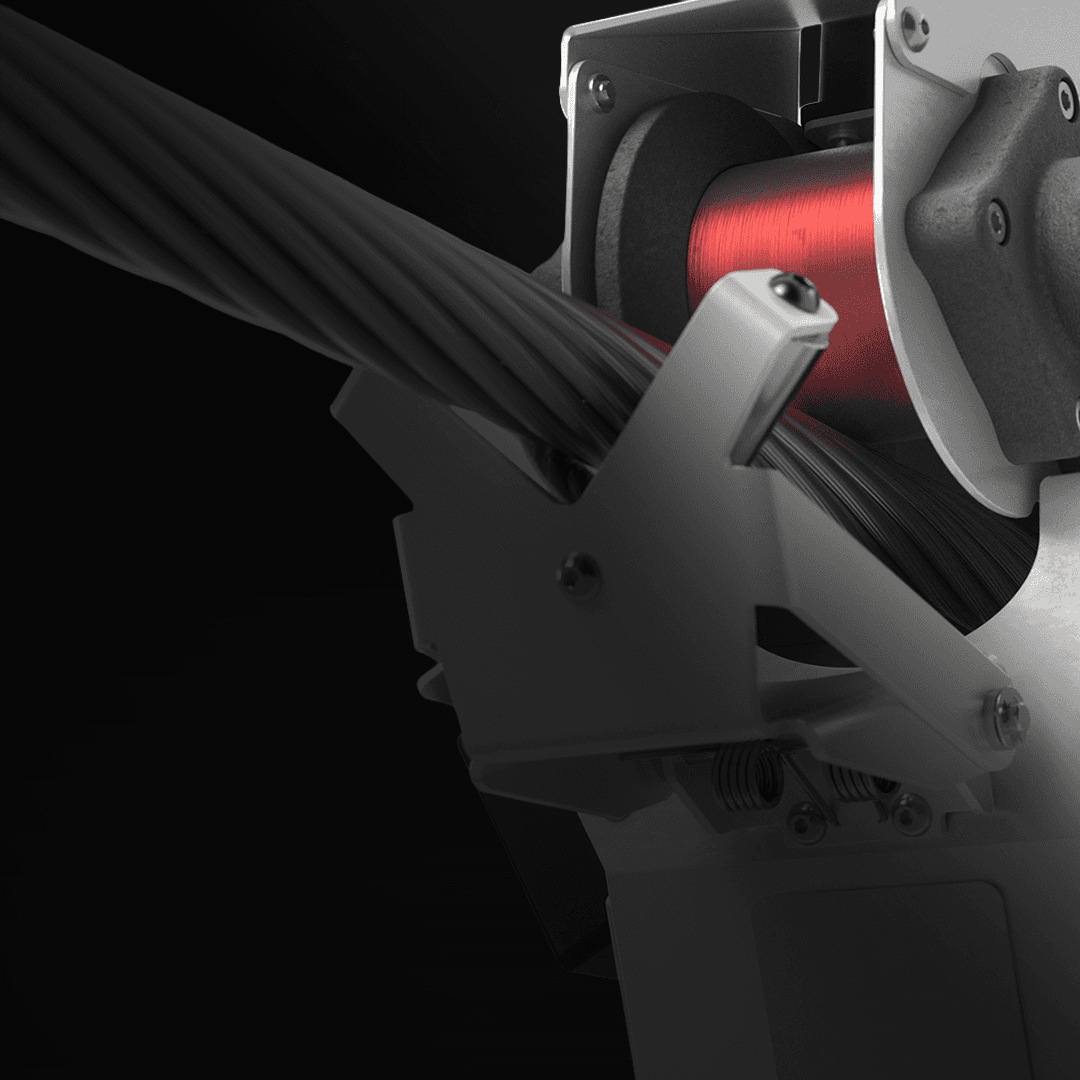
No more spot checks every few feet. Vision² measures rope diameter to sub-millimeter precision, every single inch, along the entire length of the line. OSHA's 5% diameter-reduction threshold stops being a rule of thumb. It becomes a documented data point on every inch of rope.
Automated broken-wire detection
And counting
Vision² doesn't just spot broken wires. It counts them within a specified distance — to OSHA's lay-length standard. Six randomly distributed breaks in one rope lay? Three in a single strand? Flagged before it becomes a violation.
True 360° rope visibility
Rotate, zoom, and inspect
Operators can no longer see only the side of the rope facing them. Vision² captures a complete 360° view — so reviewers can inspect every strand as if the rope were in their hand.
Real-time inspection at 8 mph
At the speed of the pull
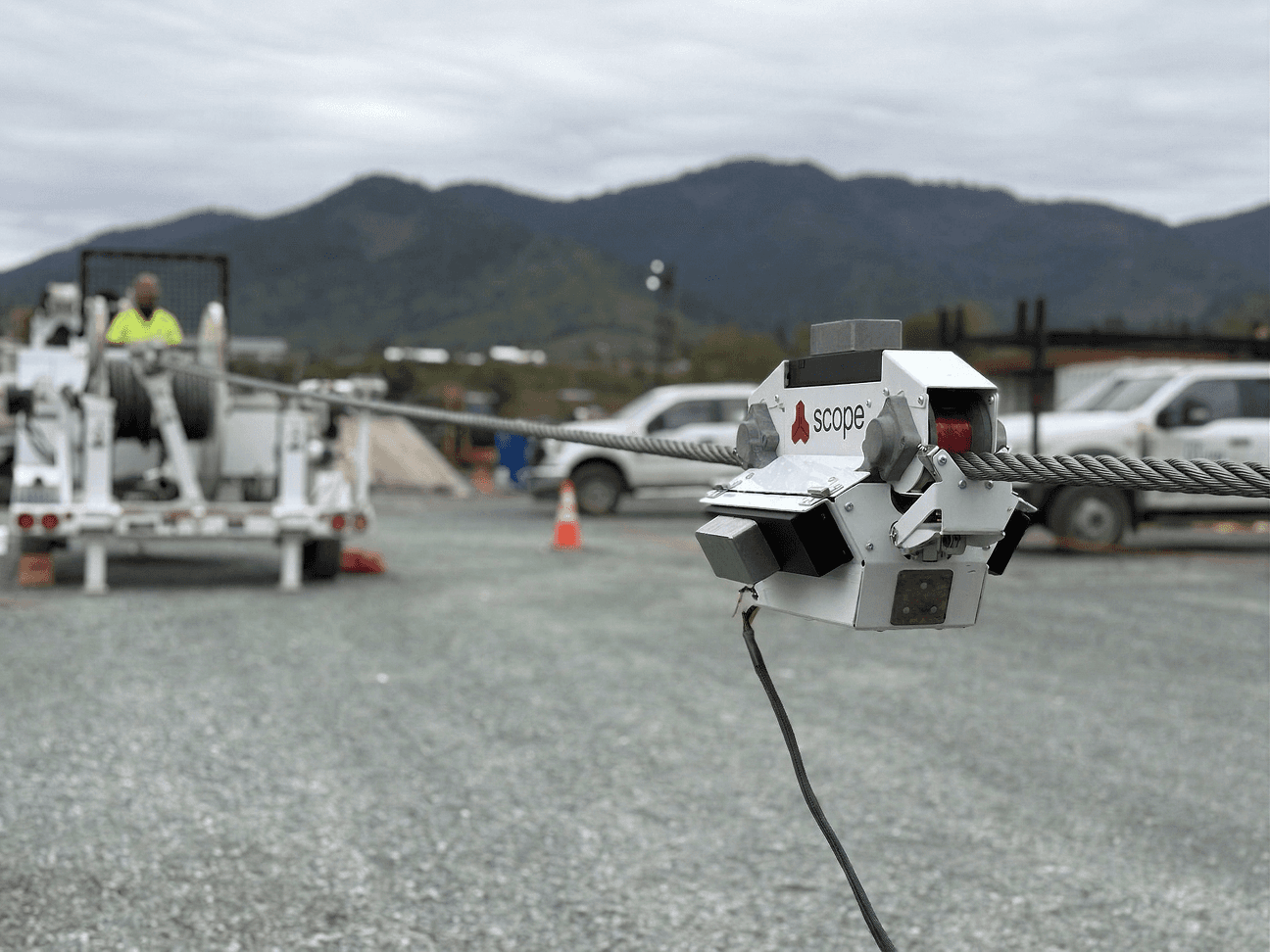
The line moves. The data moves with it. Vision² operates at the speed of the pull — up to 8 mph — so inspection is no longer a separate, scheduled event. It's part of the operation.
documentation and certificates
Instantly
Inspection records are generated automatically. No more photographing caliper readings. Every inch of the rope is captured, archived, and ready for OSHA, ASME B30, or insurance review the moment the pull ends.
Fleet-wide oversight
In real time
Fleet directors no longer chase paperwork to learn the health of their lines. Vision² streams data into a central view, so directors can see which equipment is field-ready and which needs service — instantly.
The Shift:
Vision² vs. Traditional Inspection
The Shift:
How Vision² Works
Vision² sits in-line with the rope and captures every inch as it moves. Six core capabilities make it possible:

01
Continuous diameter measurement
with sub-millimeter resolution along the entire line.
02
Broken-wire counting and distance mapping
to OSHA's lay-length standard.
03
Real-time operation at speeds up to 8 mph
— no need to slow the work.
04
Instant documentation
and certificate generation for every inspection.
05
Automated calendar notifications
or scheduled inspections, replacement triggers, and compliance milestones.
06
Full 360° rope coverage
— see the whole rope, not just the side you're standing on.
Why this matters now
Continuous data means defensible compliance. Automated documentation means no audit surprises. And 8 mph inspection means the work doesn't stop for safety — safety keeps up with the work.