A useful inspection should provide reliable information about rope condition, documented findings and the basis for the next decision.
Inspection methods and criteria vary by rope type, equipment and application.
Explore Vision²

1. What was inspected?
Identify the rope or line, its associated equipment and the inspection date.
2. How much was assessed?
State which sections were examined and note any areas that could not be assessed.
3. What condition was it in?
Describe the wear, damage or other conditions found and where they were located.
4. What was documented?
Preserve the observations, images or measurements that support the findings.
5. What decision followed?
Record the action taken, who made the decision and which findings supported it.
Visual inspection still matters.
Better information strengthens it.
Experienced inspectors bring context and judgment that technology does not replace.
Inspection technology can expand what can be observed, measured and documented while making the process more repeatable across assets, crews and locations.

Vision² is used across three primary applications, with inspection capabilities specific to the rope and equipment involved.
Utility Stringing Lines
360° visibility, hazard detection and predicted rope strength for conductor stringing operations.
Crane Wire Rope
Continuous diameter measurement, automated broken-wire detection and 360° rope visibility.
Utility Aerial Devices
Automated hazard detection, documented inspection outputs and fleet-wide visibility into winch-line condition.
Across hundreds of ropes, assets, crews and locations, organizations need a consistent way to capture, preserve, retrieve and compare condition information.
Consistent process
Is the same inspection approach being applied across teams and locations?
Clear records
Can the right inspection record be found when it is needed?
Condition history
Can one inspection be compared with the last one?
Fleet visibility
Can fleet and safety leaders see which assets need attention?
The solution: Vision²
Turn rope inspection into measurable condition data.
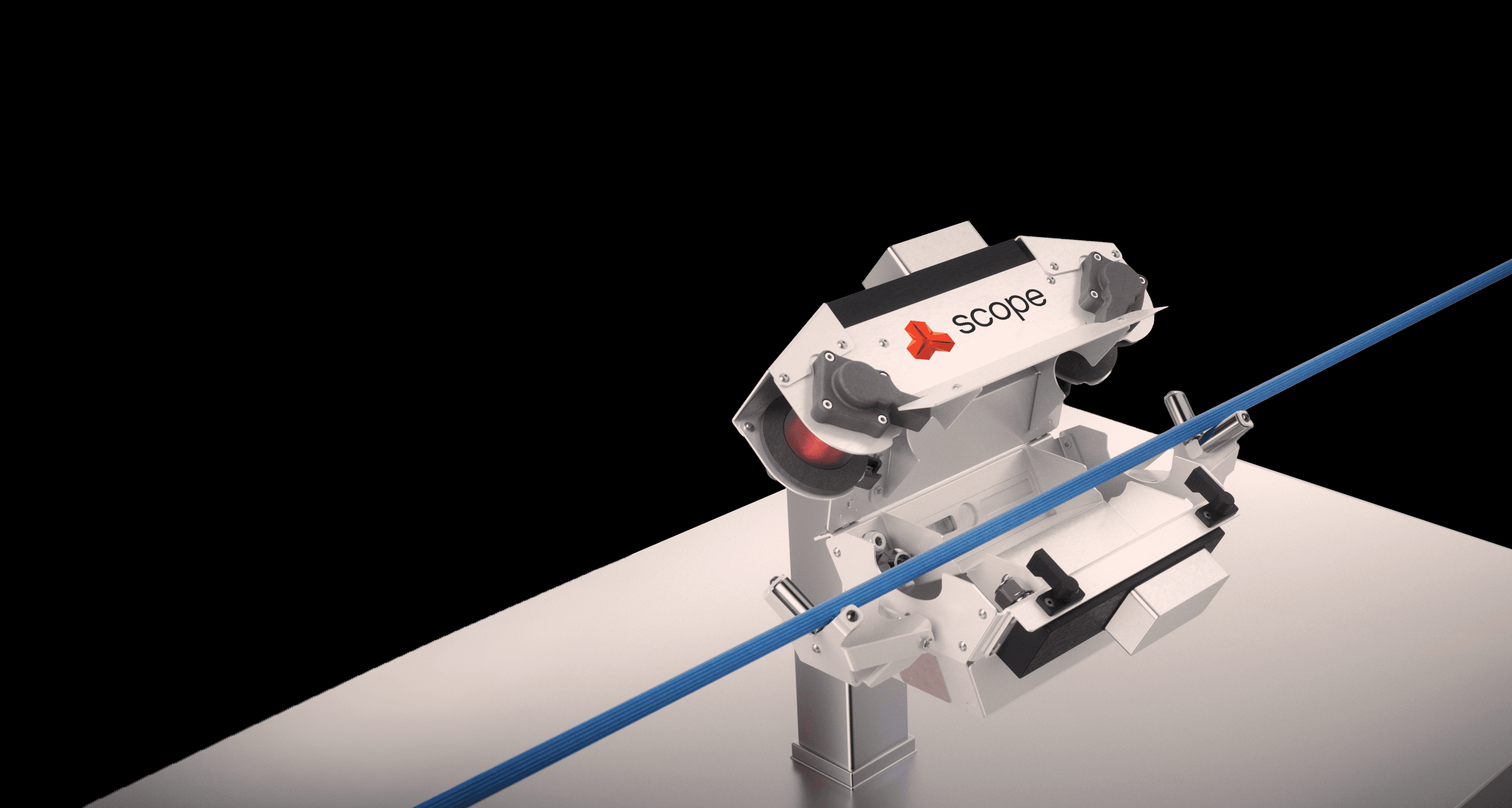
Vision² is Scope’s Physical-AI-powered platform for more consistent, documented rope inspection.
It standardizes inspection protocol and output, documents findings and gives teams greater fleet-wide visibility.
The person responsible for the asset still makes the decision, with better information and a clearer record of what the inspection found.
Specific capabilities vary by rope type and application.